When someone says chair, most of us picture the same thing without even trying: four legs, a seat, a backrest. A shape so normal it has become almost invisible.
Then you meet a chair designed well, or designed better, or designed with an idea that is impossible to ignore, and you remember that even the most ordinary objects can have character.
Sometimes too much character.
This piece started there: seven chairs, a few design detours, a bit of DIY and the usual question that looks simple until you actually start looking.
Before sitting down: what is a chair?
Wikipedia defines a chair as a piece of furniture used for sitting, classically made of a seat, legs and a backrest.
The interesting part, at least for me, is not “used for sitting”. We knew that, thanks. The interesting part is piece of furniture.
Because a chair is not only a functional object. It is a presence. It stays in the kitchen, in a studio, in a living room, beside a table or alone in a corner, and somehow says something about the place it inhabits.
Even when it would rather not.
So this is a small selection of chairs with a recognizable design: objects with a clear function and enough personality not to disappear into the room.
When a chair meets design
Design does not always follow everyone’s taste. Sometimes it provokes it, sometimes it educates it, sometimes it simply costs more than a reasonable person wants to admit.
These chairs are not a ranking. They are a personal selection: pieces that interest me for their shape, history, material or for that strange ability to look obvious only after someone has designed them.
Elephant with wooden legs
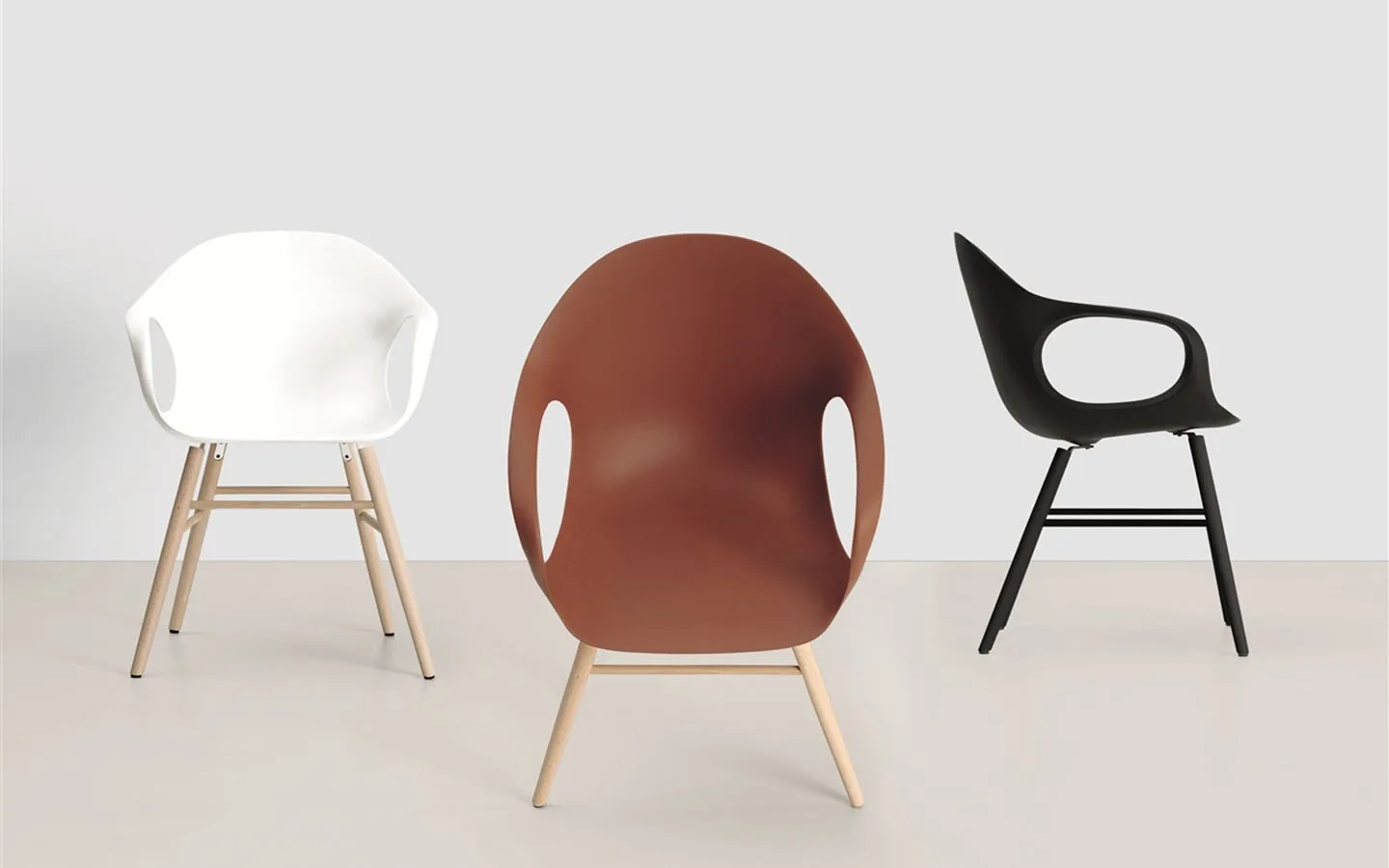
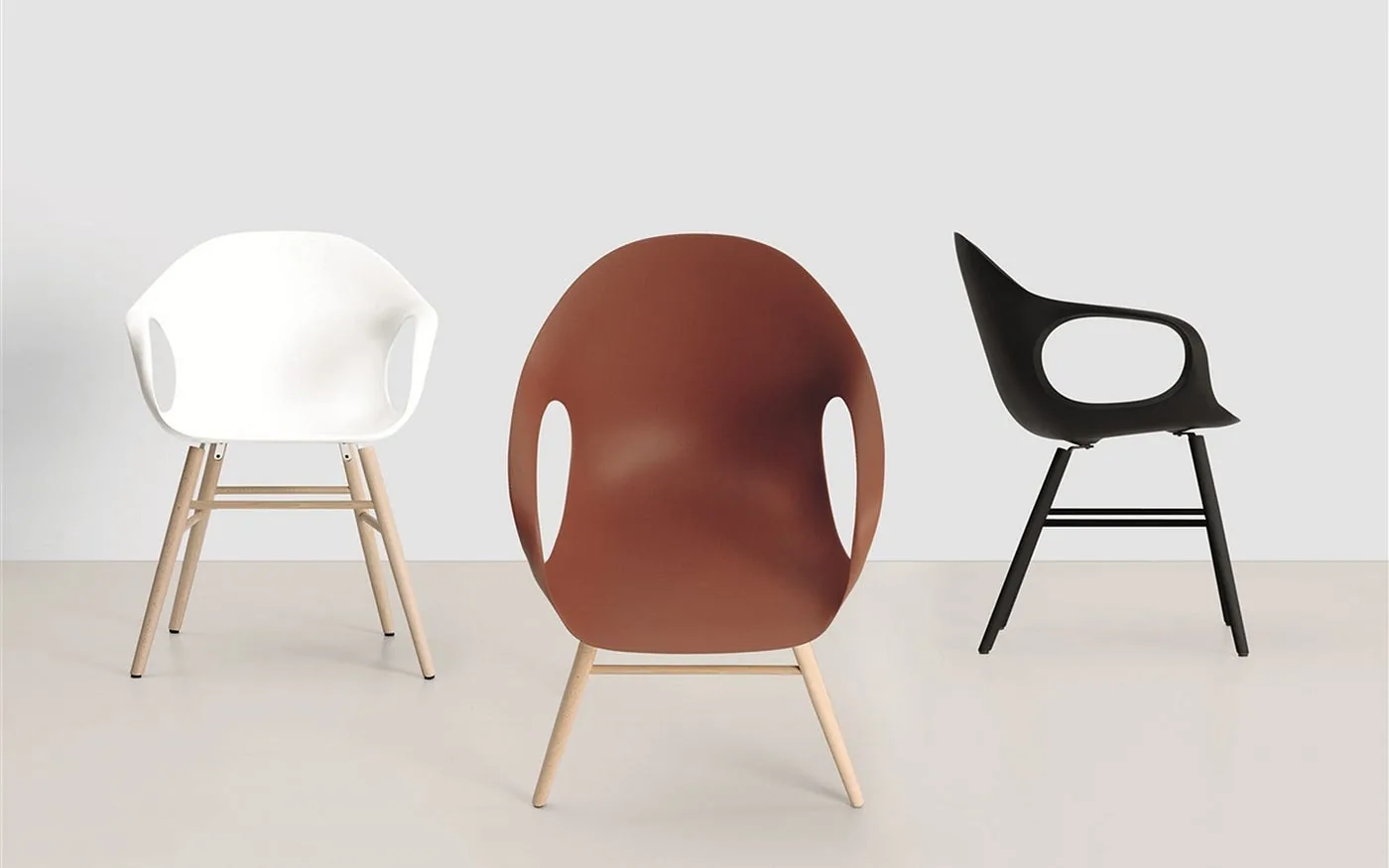 Elephant by Kristalia: when a chair decides to have a coherent name.
The Elephant chair by Kristalia, designed by Neuland. Paster & Geldmacher, is one of those objects whose name immediately makes sense.
The shell is broad, soft, slightly animal-like, but not cartoonish. It won the Interior Innovation Award in 2012 and comes in colors that try very hard to sound natural: terracotta, brown, beige, olive green.
The wooden-leg version is the one I prefer. It gives the chair a warmer, more domestic feeling and softens the plastic shell just enough.
And if you ever get tired of using it as a chair, it still looks like it could become a sled.
Piano Design Chair
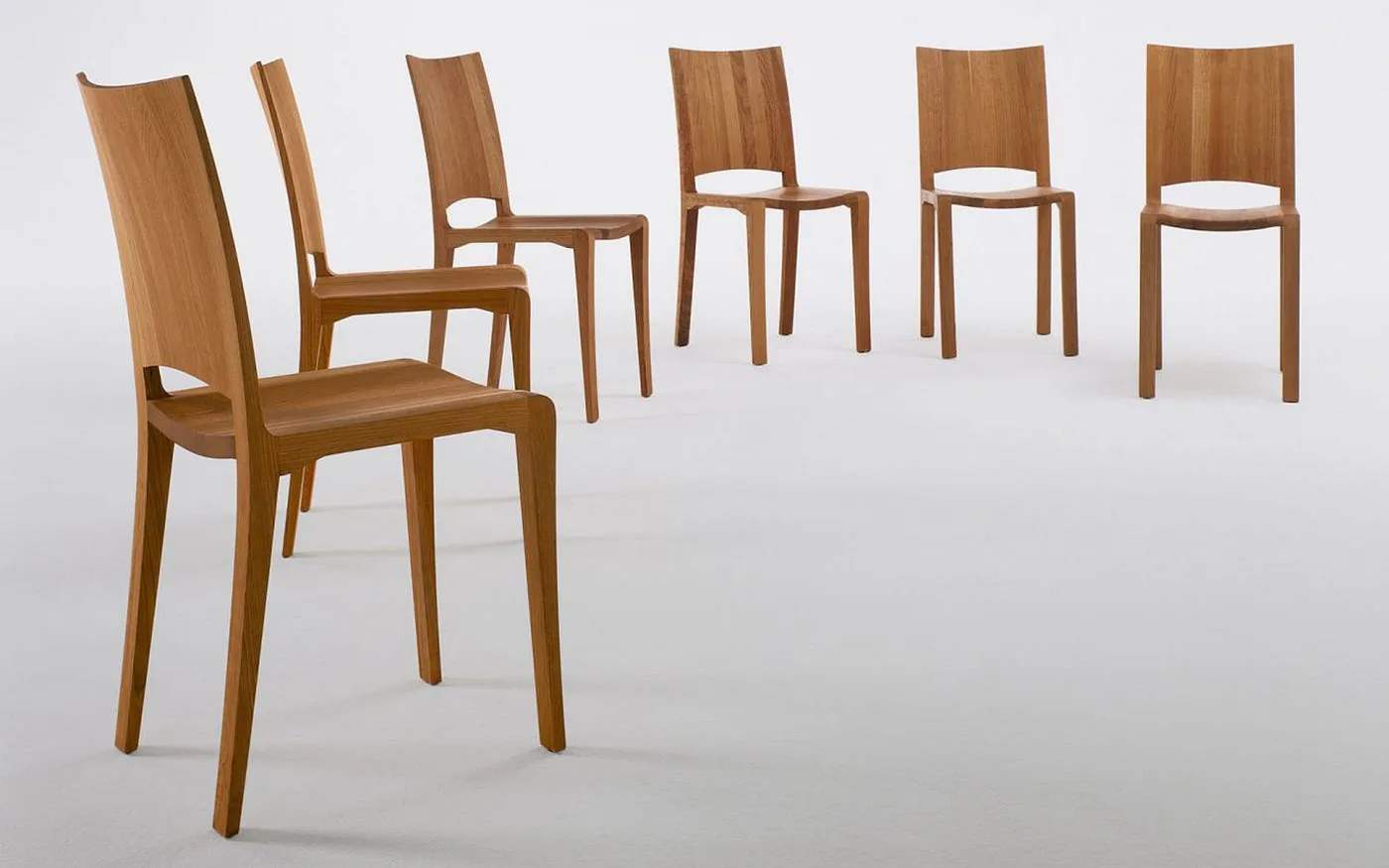
The second chair is completely different. It was designed by Renzo Piano and produced by Riva 1920.
It is made of solid wood and assembled without metal parts. That already tells you something about the object: it is not trying to impress through spectacle, but through construction.
It is also surprisingly comfortable. You sit down expecting a beautiful wooden object and instead find something stable, warm, and very usable.
Which is not always guaranteed in design.
Tulip Chair
The Tulip Chair by Eero Saarinen is one of those pieces that everyone has seen somewhere, even without knowing its name.
Its single central base removes the usual tangle of legs under the table. The result is clean, almost futuristic, but still domestic enough to survive outside a museum.
It is the kind of object that proves how much subtraction can change a room.
Red and Blue Chair
The Red and Blue Chair by Gerrit Rietveld is not exactly the first thing I would suggest for a long dinner.
It is more idea than comfort, more manifesto than chair. Lines, colors, planes. A piece of De Stijl that looks as if someone turned a painting into something you can technically sit on.
Technically.
But that is the point: some chairs are meant to disappear into daily life, others are meant to remind you that objects can also think.
Enzo Mari and Autoprogettazione
With Enzo Mari, the chair becomes almost political.
His Autoprogettazione project was not about buying an object, but about understanding how an object is made. Simple boards, visible joints, basic construction, a direct relationship between user and thing.
It is DIY, but not in the decorative sense. It is DIY as a way to regain awareness.
And that, honestly, is still a very modern idea.
Leggerissima
The Leggerissima by Chiavari is a reminder that lightness can be serious.
It does not need a dramatic gesture. It is thin, precise, elegant, and the result of a long craft tradition. A chair that looks fragile until you understand how much intelligence there is in removing weight without removing structure.
Quiet design often ages better.
Mariolina
The Mariolina looks almost normal. That is part of its strength.
A metal frame, a simple seat, a familiar shape. But familiarity does not mean absence of design. Sometimes design is exactly the work needed to make something obvious, affordable, repeatable and still decent to look at.
Not every chair has to become an icon.
Some just have to do their job very well.
So, which one would I choose?
The honest answer is: it depends on the room, the table, the kind of life happening around it and how much dignity one wants to preserve while checking the price.
But the reason I still like this small list is that each chair answers the same question differently.
What is a chair?
A tool. A sign. A structure. A small piece of culture pretending to be furniture.
And sometimes, yes, also something to sit on.